
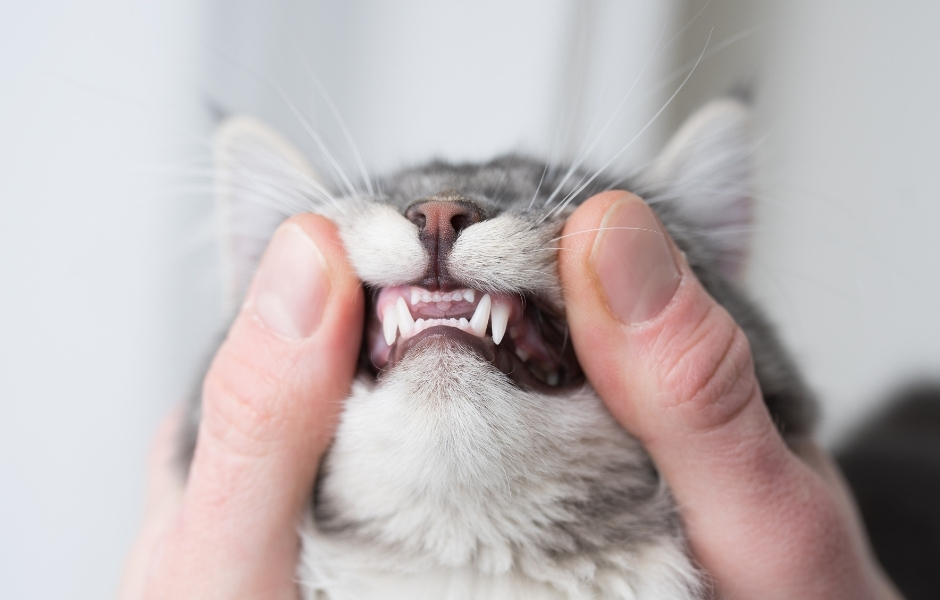
More than 80% of cats over 3 years old develop some form of periodontal disease — and the earliest, most reversible stage is gingivitis.
If you’ve noticed your cat has bad breath, red gums, or isn’t eating like usual, they may already be showing signs of this common dental condition.
At Liesse Animal Clinic, we believe prevention and early treatment are the keys to keeping your cat’s mouth (and body) healthy.
Here’s everything you need to know about gingivitis in cats, from symptoms and causes to treatment and prevention.
Gingivitis is the inflammation of the gums (gingiva) surrounding a cat’s teeth.
It develops when plaque—a sticky layer of food particles, bacteria, and debris—builds up on the tooth surface and irritates the gumline. Within just 24 hours, plaque can harden into tartar (calculus), which is much harder to remove.
In the early stages, you might notice mild redness and swelling, but the gum surface is still smooth. As gingivitis advances, the gums become darker, more irregular, and tender, and tartar can build up below the gumline — leading to tissue damage and pain.
The good news? Gingivitis is completely reversible with proper dental care and regular veterinary cleanings.
Gingivitis isn’t just a cosmetic concern — it’s the first stage of periodontal disease, a progressive condition that can eventually lead to tooth loss and infection.
When bacteria build up under the gums, toxins begin destroying the tissue and bone that support your cat’s teeth. Left untreated, this can cause chronic pain and systemic inflammation that affects overall health.
That’s why it’s crucial to recognize gingivitis early and take preventive action.
Cats are experts at hiding pain, so by the time you notice symptoms, the condition may already be advanced.
Watch for these warning signs:
If your cat shows any of these symptoms, it’s time to schedule a dental checkup at Liesse Animal Clinic.
While plaque and tartar are the main culprits, several other factors can contribute to gingivitis:
A combination of genetics, diet, and overall health can determine how quickly gingivitis progresses.
At Liesse Animal Clinic, diagnosing gingivitis begins with a thorough physical and oral examination.
We’ll review your cat’s health history, diet, and home dental routine, then examine their teeth and gums for visible signs of inflammation or tartar.
For a complete assessment, a dental exam under anesthesia may be recommended.
This allows us to perform dental X-rays, measure gum pocket depth, and remove tartar safely below the gumline — something that can’t be done while your cat is awake.
The goal of treatment is to remove plaque and tartar, reduce inflammation, and address any damaged or infected teeth.
Your cat’s teeth will be cleaned and polished under anesthesia. Any loose or severely affected teeth may be extracted to prevent pain and infection.
Dental X-rays help detect infection at the tooth roots and determine if gingivitis has progressed to periodontal disease.
After treatment, your veterinarian will teach you how to keep your cat’s teeth clean at home using pet-safe products.
Follow-up exams may be scheduled annually or more often, depending on your cat’s condition.
The best treatment is prevention. Here’s how you can help keep your cat’s teeth healthy between vet visits:
Use a cat-specific toothbrush and toothpaste. Start slowly, letting your cat get used to the process. Aim to brush daily or at least every other day.
Ask your vet about antibacterial rinses or water additives to reduce plaque buildup.
These can help scrape off plaque naturally while keeping your cat entertained.
Regular professional cleanings are vital for maintaining oral health and catching issues early.
Pro Tip: Plaque can reform within 24 hours, so consistency is key!
If your cat has persistent bad breath, red gums, or changes in appetite, don’t wait. Gingivitis can progress quickly if left untreated.
Contact Liesse Animal Clinic today to schedule a dental evaluation — our team will create a care plan tailored to your cat’s oral health needs.
1. Can gingivitis in cats go away on its own?
No. Gingivitis requires professional cleaning and consistent at-home care. The inflammation won’t resolve without removing plaque and tartar buildup.
2. How often should my cat have their teeth cleaned?
Most cats need a professional cleaning once a year, though some may need it more often depending on age and health.
3. How can I brush my cat’s teeth if they resist?
Start gradually by letting your cat lick the toothpaste from your finger, then move to brushing a few teeth at a time. Positive reinforcement helps them adjust.
4. What happens if gingivitis is left untreated?
Untreated gingivitis can lead to periodontal disease, tooth loss, and painful infections that may spread to other parts of the body.
5. Can diet help prevent gingivitis?
Yes — feeding dental-formulated kibble and avoiding sticky foods can reduce plaque buildup.
At Liesse Animal Clinic, we’re dedicated to protecting your cat’s oral and overall health.
From gentle dental cleanings to personalized at-home care plans, our veterinary team helps you keep your feline friend healthy, happy, and pain-free.
📞 Call us today to schedule your cat’s dental exam!
Let’s make sure your furry friend’s next purr comes with a healthy smile.

